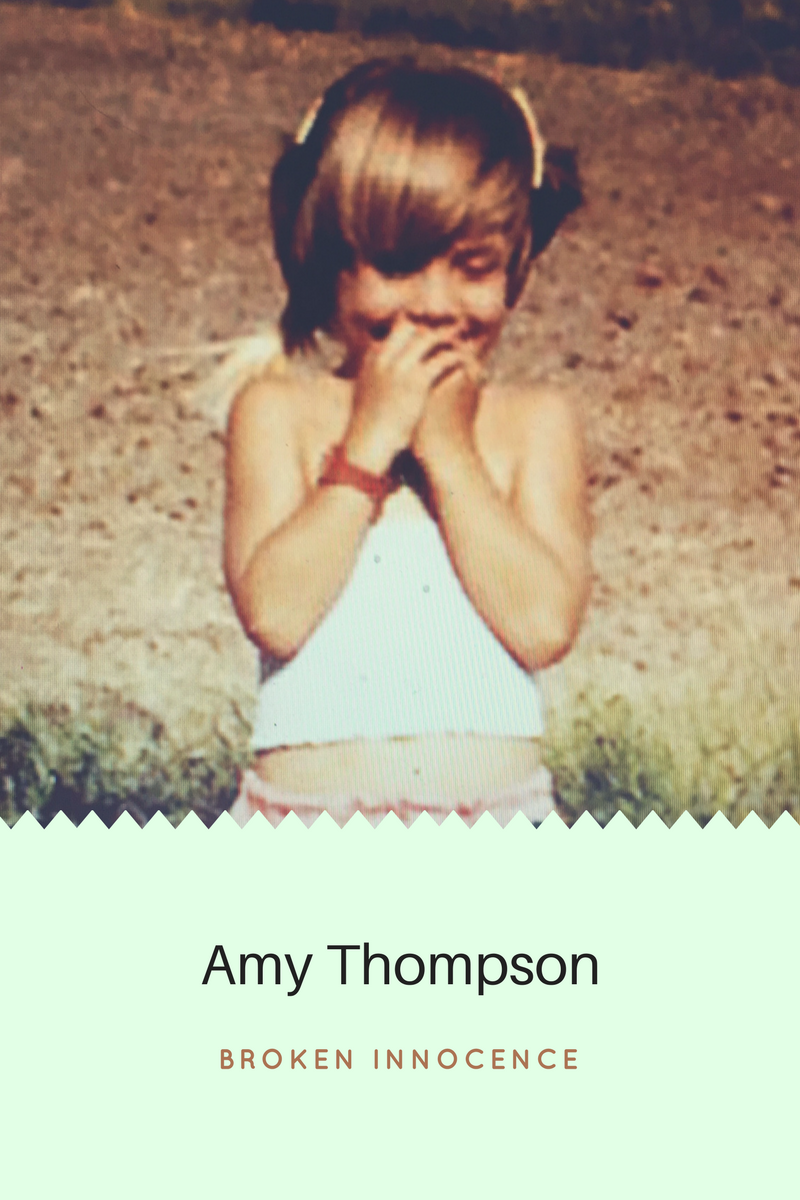
“Climbing Amy’s Sugar Tree: Memories, Movies, and Unspoken Goodbyes”

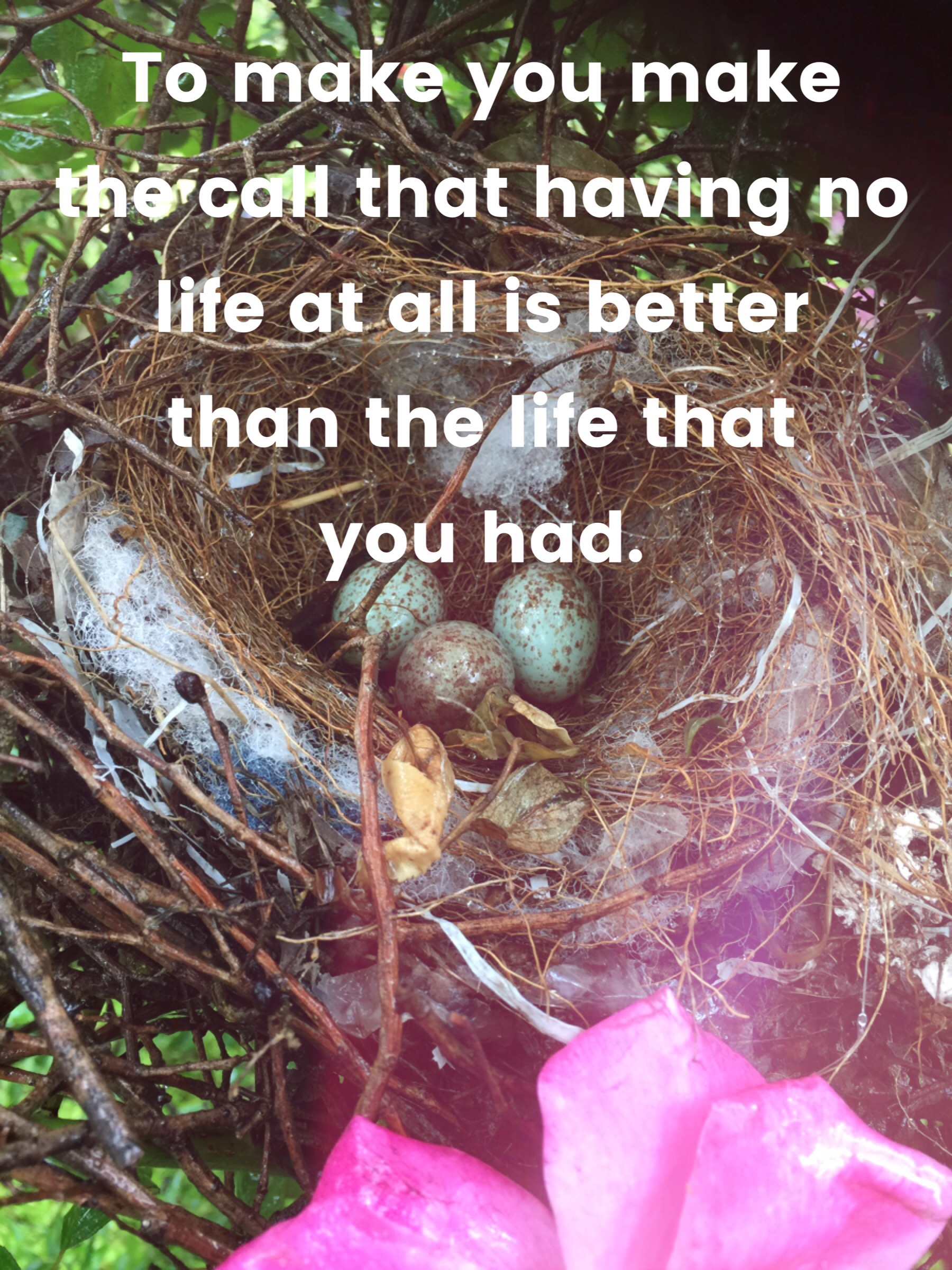
This weekend, while hiding the golden egg for Easter, I came across a bird’s nest beautifully tucked into the middle of one of Amy’s rose bushes. Inside were three delicate blue speckled eggs—life beginning anew.

I sat in Amy’s garden for a while. I know she would have loved how it has grown. Her sugar tree is so big now that I can actually climb it. It felt incredibly surreal. I hadn’t climbed a tree since I was a child—and Amy was with me then.

Later that evening, my husband was watching a Richard Dreyfuss movie. I’ve always liked him as an actor, so I found myself drawn into the story. In the end, his character, a doctor dying of cancer, chooses to end his life to avoid further suffering. He carefully plans how he wants to die.

Amy, as an ER nurse, knew exactly how to take her own life. She knew precisely what to take. She had promised me she wouldn’t try again. Perhaps it was selfish of me to plead with her to stay. I wanted her to live because I couldn’t imagine my life without her. I loved her— I still love her deeply. She was suffering. She told me so many times, “Sally, I’m tired.” She was tired of fighting her depression. How lonely she must have felt in those final moments—alone and naked in her bed. Even in death, she tried to make things easier for others by not wanting emergency services to have to remove her clothing.

She died while writing a suicide letter to a man she barely knew—a man who didn’t love her. He didn’t know she was broken, so he was mean and hateful in his attempt to push her away. I do not blame him for her death, but there is never a good reason to treat someone with such cruelty. He never read her letter, but I did. It would have hurt him. He had a daughter, so perhaps it was for the best.

He chose to take his frustrations out on an innocent woman about whom he knew nothing. Amy loved hard because she needed love so desperately. I’m sure she moved too fast, as he told me. Maybe she moved quickly because she was trying to save herself. We are not all the same. Broken children do not grow into unbroken adults. The things we say—or don’t say—can profoundly affect someone’s life, and sometimes even their death. I hope he learned that from the experience.

If we had a mirror into others’ souls, perhaps we would know who needs to be handled with extra care. There are many evil people in the world, and they often hide in plain sight within our circles. When we are hurt—especially by those who are supposed to love and protect us—we tend to close ourselves off. I believe this makes abused children form especially strong, loyal bonds with those we do let in.

Amy had lost faith that the world contained much goodness. Even in death, some have tried to slander her name. They would rather tarnish the memory of someone who suffered so greatly than face the truth of her pain. Nature offered her no justice. She was raped, molested, and abused by those who should have shielded her. They got away with it—and so much more.

I cry every time I imagine her lying in that bed, taking her last breath alone. I wish I could have saved her. Even more, I wish I could have held her in that moment so she would know she was not alone. Even if she needed to go, I would have been there.

I was angry with her for a long time. Suicide takes all your pain and transfers it to those who love you. It has been—and remains—my burden to bear. It is incredibly hard. I feel as though I failed her. I did not fail at loving her. I failed at helping her express and release her pain.

I know it would have helped her immensely to stand on that mountain with me, holding my hand, and scream everything she had carried. It was too much for one person to bear—being forced to keep it all hidden so others could maintain their comfortable illusions. It is disgusting.

She was not to blame for anything that happened to her. The darkness may have claimed her life, but I carry her heart inside my own. She gave it to me.
“Their Amy: The Healing Power of Chosen Family and Honest Love”

Again, I was recently told, “Only the family should know family business.” Who ultimately pays the price when that is the rule? Why do so many families insist on it? It is a devastating problem for countless abused children.

Their family members often refuse to sit down and have an honest conversation about what happened. Instead, they choose to silence the victims. Perhaps this is why survivors of abuse are twelve times more likely to die by suicide. They are treated as shameful secrets and blamed for things they had no control over. I know this haunted Amy. She worried constantly that another child would be hurt.

Having children of my own has given me a deeper understanding of how important family can be. Even more so, it has shown me how vital love and trust are. I want to teach my children to stand up for what is right, even when it is difficult.

There is evil in every corner of life. The danger arises when we refuse to acknowledge it simply because it is connected to our own family, church, or community. A clear example is the abuse that has occurred within many religious institutions. Churches themselves are not evil, yet evil can hide within them. When a church chooses to conceal or silence abuse, it only allows the perpetrators to create more victims.

History has shown us this pattern time and again, and it continues today. No matter the setting, we must bring abusers into the light. How else can we hope to stop them?

I am sure you have heard the expression, “Blood is thicker than water.” Many interpret it to mean that family should always come first. However, that is not its original meaning. The phrase once referred to a “blood bond”—a deep, chosen connection between people, often sealed by mixing blood from cuts. This bond was considered stronger and more sacred than the “water” of the womb (biological family ties).

Some cultures express a similar idea with “Blood is thicker than milk,” referring to the milk shared in nurturing family bonds. The core meaning remains: we have the power to choose our strongest, most meaningful connections.

I love many people in my family. There are those I would proudly choose as my “blood” in the truest sense of the word. They are loving, supportive, and beautifully flawed, just like the rest of us. Their encouragement has lifted me up and helped me survive. At the same time, I worry about those who do not have even a few such loved ones—the ones who listen, wipe away tears, and carry us when the pain becomes too heavy. Their Amy.

“Nothing to See Here: A Knife, Silent Tears, and the Failure to Protect”

Submission was forced upon me as a child. I had no free will. When a spirit is broken, it becomes programmable and easily manipulated. I have often wondered if many people view children as objects rather than individuals with rights. What protections do they truly have in our country? I know I felt like a possession when I was young.

When I was nine, a police officer came to our home. My abuser was in a violent rage, stabbing a long knife into the kitchen walls and even between the cabinets. He had punched a hole in the wall and struck our mother. I remember my little brother watching from the hallway, wide-eyed with terror. It was a terrifying scene for a house full of five young children.

The officer spoke with him briefly and then left. My abuser faced no consequences, and we children received no protection. Why?

Was it because we lived in a small town? Did the officer see no immediate danger to five small children? I know this cannot be how things are supposed to work. As an adult, I still struggle with how little accountability is placed on those who abuse—and on those who allow it to continue.

So many people choose not to get involved because they fear an uncertain outcome. I have heard others say, “They might just get abused worse in another home.” I cannot rationalize it that way. Yes, there is a risk that a child could face new hardships, but viewing the situation through that lens often serves more to protect our own comfort than to safeguard the child. We should never feel guilty for trying to protect a child. Right is right.

The choice should be clear and moral: If you know abuse is occurring, speak up. We are not responsible for every possible outcome, but we are responsible for turning a blind eye. Who will fight for that child if we do not?

From birth, children are essentially owned by their parents—whether those parents are abusers, addicts, narcissists, or worse. They remain in their care until someone intervenes. Even then, the system may return them. But knowing that someone tried can be a powerful light in a very dark tunnel for that child.

The police officer who came that day chose not to get involved. He left, and as far as I know, he is still a police officer today. As an adult, it makes no sense to me. A knife-wielding man in a violent rage around small children—nothing to see here. Except, perhaps, the silent tears of the innocent and the dozens of holes left in the walls.

“100,000 to 300,000: Facing the Reality of Child Sex Trafficking in America”

This week, I had the profound pleasure of meeting a remarkable missionary woman who dedicates her life to rescuing children from sex trafficking and abuse. Her work is deeply inspiring. She has seen firsthand the scale of this epidemic in our country and around the world.

When most people hear the term “sex trafficking,” they imagine strangers kidnapping girls or boys and smuggling them across borders. The reality is often far more insidious and closer to home. Here are the clearer definitions:

Human trafficking is the practice of luring, coercing, or forcing individuals into highly exploitative labor with little or no pay.

Sex trafficking is a specific form of human trafficking in which people—often children—are enslaved specifically for sexual exploitation.

Many still view prostitution as a personal “choice,” largely shaped by media portrayals. In truth, the average age of entry into prostitution in the United States is between 12 and 14 years old. Most of these children are not making free choices—they are victims of manipulation, violence, deception, and grooming by pimps who pose as caring figures. These predators use false promises of love and security to destroy young minds and trap them in modern slavery.

Under no circumstances can a child truly consent to prostitution. They are coerced through fear, abuse, and control. According to government estimates, between 100,000 and 300,000 American children are at risk of sexual exploitation at any given time. Traffickers often brand their victims with tattoos, marking them as property.

Most sex trafficking in the U.S. occurs in hotels, bars, and through online advertisements. The majority of cases that come to light are reported by ordinary people who notice something wrong and contact law enforcement.

The missionary shared a story of witnessing a young girl being trafficked at a Walmart near my home. She described her attempt to help the girl with such courage and compassion that it moved me deeply. Her bravery made me reflect: Would I even recognize the signs if I saw them? So I researched further. Here are some important red flags that may indicate trafficking:

• Appears malnourished or sleep-deprived

• Seems controlled by another person and cannot come or go freely

• Displays fear, anxiety, depression, submissiveness, or paranoia

• Becomes especially anxious or fearful when law enforcement is mentioned

• Avoids eye contact

• Has few or no personal possessions

• Does not control their own money or identification

• Is not allowed to speak for themselves

• Claims to be “just visiting” but cannot clearly explain where they are staying or what city they are in

• Tells inconsistent or rehearsed stories

• Appears disconnected from family, friends, school, or community

These are only some of the possible indicators. I am now far more watchful and aware. True change begins when ordinary people choose to see what is happening around them and have the courage to act.

“Gentle Hands in the Hospital: Love, Legacy, and the Weight of Family Truths”

I had surgery almost a week ago. It proved far more difficult on my body than I had anticipated. Throughout the ordeal, my husband was incredibly loving and attentive. When I became very sick afterward, he cared for me with such tenderness.

Yesterday, my daughter showed me photographs she had taken at the hospital—images I hadn’t realized she captured. In them, her father was gently feeding me ice chips and softly rubbing my face. As I looked at the pictures, I was struck by how profoundly moments like these shape children. The love and compassion he showed me in my vulnerability will stay with her forever.

My husband has been remarkably supportive of my writing this blog, even though he is related to my abuser. Many in his family have responded with love and encouragement. Several have shared their own frightening encounters with the same man.

One family member recounted how my abuser once told her he could have sex with her if he wanted to. She was left terrified and confided in her father, who took immediate steps to protect her. Most sexual abusers begin by making sexually suggestive comments to test a child’s reaction before escalating to physical touch. I am deeply grateful she had a safe parent to turn to.

We cannot choose our relatives, nor are we responsible for the evil they commit. When families allow abusers to hide behind the veil of “family loyalty” or work to silence the truth, they only enable more harm. It is not your fault if a brother, sister, parent, or friend abuses a child.

It would be heartbreaking if someone I loved harmed a child. In such a case, they would receive no protection from me. I would want them to get help while doing everything possible to ensure no other child was hurt.

Too many people have shared similar stories with me—how they were pressured to protect the family name above all else. A name is just a name. A child’s heart and life are real. The pain they carry lasts a lifetime.

I would rather remain nameless for all eternity than aid in any form of abuse. It is a profound tragedy that so many are willing to risk a child’s wellbeing to preserve a reputation.

“In the Land of the Free: Why 90% of Abused Children Get No Justice”

It is estimated that only 10% of child abuse is ever reported—a tragedy of staggering proportions. Even more sobering, 90% of abuse is perpetrated by someone the child already knows and trusts.

I understand how difficult this topic is for so many. When we confront the statistics—1 in 4 girls and 1 in 6 boys sexually abused before the age of 18—it becomes clear that we are not speaking about this epidemic nearly enough.

Yesterday, I passed my own abuser while driving. The encounter left me wondering: How many others has he harmed? How many people choose to look away, to blame the victims rather than face the truth? It is easier to remain in denial, to make excuses, and to lash out at those who dare to speak honestly.

Most abusers present as friendly, likable, and trustworthy. They often target shy or less confident children. No parent can offer a guarantee of absolute safety, but we can shift the statistics through awareness and action. Here are some meaningful ways we can better protect the children in our lives:

• Get to know your children’s friends and all the adults in their world. Be visibly involved in their activities—it sends a powerful message.

• Trust your instincts. If something feels wrong, speak up. Never be afraid to voice your concerns.

• Listen carefully to your child. Create space for open, honest conversations.

• Ask the important questions. Always run background checks on caregivers and those who will spend time with your children.

• Watch for signs that a child seems uncomfortable or fearful around a particular adult.

• Normalize conversations about child abuse. Let others know that you and your family are informed and vigilant.

Remember: only 10% of abuse is reported, and even then, true justice is rare. This means the vast majority of abusers—over 90%—face no consequences. In a nation that calls itself the land of the free, far too many children are denied justice. If you were an abuser, wouldn’t those odds embolden you? We must do better.

By shining light on this darkness, listening to survivors, supporting families, and refusing to stay silent, we can create a safer world for every child.

“Head to Tail: Scars, Silence, and the Second Chances Abusers Receive”

We lived in a big farmhouse when I was seven. One day, all three of us girls received a severe whipping for allegedly stealing Sugar Daddy suckers. He called it “whipping from head to tail.”

When he finished, my mother called the woman we had supposedly stolen from. She learned that the woman had placed the candies in our bag as a surprise. We were then handed the belt and told to whip him in return. He had beaten us for nothing, and now it was our turn. He was drunk, as usual.

I was paralyzed with fear and refused. Amy, however, began hitting him with everything she had. She struck him until he wrested the belt from her hands. I have always admired her bravery. Afterward, the three of us crawled into our shared bed, sobbing under the covers. It was so cold that we could see our breath. Our bedroom had no heat, so we huddled together for warmth.

The next day, after school, my mother received a call from the school. She told her husband he would no longer be allowed to spank us. The school had threatened to notify authorities if we arrived with marks on our bodies again. I have often wondered: Why do child abusers so frequently receive second chances?

Did the school official truly believe a simple threat would bring meaningful change? I still remember crying out in class one day when my teacher patted my back. I can still see the look on her face as she continued up the aisle. It is easier to walk away, but what message does that send to the frightened child left behind?

Why do adults have more rights than children? How can a parent who inflicts such harm be given warnings rather than immediate intervention? If an adult struck another adult in the same manner, it would be considered assault. Was I simply a possession?

I don’t recall many more belt whippings after that call, but the abuse did not stop. I remember him striking my hand with a metal vacuum hose, leaving a scar I still carry today. There were countless slaps and punches to the head. Abusers always find a way.

When I was finally removed from my mother’s home and placed in foster care, social workers documented both physical and emotional abuse. She was never charged. Had I been an adult, the consequences would have been far different. The photos above come from the family services investigation at the time of my removal.

How can a system determine that a parent has abused one child, yet later entrust that same parent with the safety and wellbeing of another? Why not remove all children from a home where even one is being harmed?

It is difficult to understand why, in the very same county that removed me for abuse, a judge would later place another innocent child into that environment. I had hoped things had changed since my childhood. I was wrong. While our country has made progress since the 1980s and 1990s in many areas, we remain painfully behind when it comes to protecting children’s rights.

“The Weight of Unspoken Scars: Why Silence Fuels Generational Abuse”

When I was young, new environments or unfamiliar people triggered a state of heightened alertness. Being observant became a necessary defense mechanism—one that kept me on constant guard.

I remember hiding from several men who frequented our home. One afternoon, I was dragged out of my closet so that my mother’s husband and his friend could surround me with a blanket. I couldn’t get out. I was around six years old. I fought desperately, screaming and kicking while they laughed. Eventually, exhausted, I lay still as they continued to hit me, trying to provoke a reaction. For years afterward, I was terrified of being completely covered by a blanket. Their laughter left a scar that still echoes.

These kinds of scars travel with children into adulthood. Often, the resulting behaviors are misunderstood by those who grew up shielded and safe. How can someone who was protected truly grasp the heart and mind of an adult shaped by abuse? How do we teach abused children that they are never to blame? And how can we give them a voice when we, as a society, only speak of these things in whispers?

I once read about a family where generational abuse began with the grandfather. Because nothing was done, the cycle continued through his children and grandchildren. One man’s unchecked actions created a monstrous legacy of pain. Far too many families share similar stories.

When a subject becomes taboo, it only grows stronger in the shadows. Abusers count on our discomfort and silence. They rely on the fear of speaking the truth because the topic is painful and morally grotesque. Yet the problem exists whether we acknowledge it or not.

Studies show that in the United States, 1 in 4 girls and 1 in 6 boys are sexually abused before the age of 18. By comparison, 1 in 3 women will develop some form of cancer in their lifetime. We rightly pour vast resources into cancer research and awareness. The same level of recognition and courage is needed here. Pretending abuse doesn’t exist will never protect our children. We must break the silence—for the sake of every one of those 1 in 4 girls and 1 in 6 boys.

“Becoming the Shield: Fear Turned to Fierceness and a Beacon for Change”

It is so beautiful outside today. The tulips in my sister’s memorial garden are just beginning to rise. I find deep comfort sitting in her garden, gently swinging on her swing. Whenever I wish, I can still hear Amy’s laughter and voice. No one can ever take that from me.

A question arises often in conversations with others: Am I afraid? I suppose it’s natural for people to wonder, given that I am speaking out. But standing against darkness should never inspire fear. The only fear I carry is what will happen if I remain silent. Will the soul of my innocent niece one day mirror the pain my big sister endured?

I have come to believe that only the weakest of minds harm a child. Children are only as strong as the shields surrounding them. As a child, I was defenseless. My strength—when it came—derived from those who were meant to protect me.

Who decides who gets to be a child’s shield? Does simply giving birth grant someone the absolute right to decide whether a child will be protected? And when we know a child is unprotected, what is our responsibility?

Is it the state’s duty to intervene? Should a person in an office, far removed from the reality, decide a child’s fate? Has that official ever lived as an abused child? Do they truly understand the fears involved and the profound sensitivity required to help?

I witnessed children being abused, and I myself was denied basic nourishment in some of the foster homes where I was placed. Foster parents are often instructed not to love, not to show affection. Is this truly how we mend what is broken?

What will it take for those who have always been shielded to open their eyes? So many people knew I was being abused and chose to do nothing. They could have saved my sister. Regardless of their silence, I choose to move forward.

Do you wonder if I am afraid?

Surviving childhood abuse has shaped who I am. Those who hurt me may have wished I had not survived, but I did. In surviving, I became someone who no longer fears them. Instead, I have become someone they—and others like them—should perhaps fear in a different way. Not because I wish them harm, but because I will never again allow them near any child. Not ever. That is not too much to ask of anyone who has abused a child.

I have filed an appeal in my niece’s case. Since the judge ruled without reviewing the evidence, I hope we have a strong foundation. I have not heard from my niece at all since court, and my heart aches for her safety every single day.

Would you offer your shield to protect a child from abuse?

When I chose not to remain silent, I chose to become a beacon for change. That beacon grows brighter every day. I will not stop fighting to save my niece.

Evil and fear are old acquaintances for any abused child. But as an adult, my fear transformed into something else entirely. It fully awakened when I stood face-to-face with evil again. I can only describe it as a fierce, ferocious commitment to justice.